
When it comes to choosing a water tank, most people jump straight to price.
But the real first question you should ask is simple:
Do you need a tank with a liner, or a tank without a liner?
This decision will determine how long your tank lasts, how much you spend on maintenance, and how reliable your water supply will be in the years ahead.
What is a Liner Tank?
A liner tank is a steel shell fitted with a flexible liner inside. The liner does the actual job of holding the water, while the steel structure provides support.
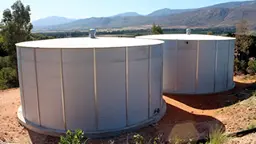
Advantages:
✅ Lower upfront cost
✅ Quick to install
Disadvantages:
❌ Liner wears out in 5–10 years
❌ Expensive and disruptive liner replacements
❌ Water supply downtime during repairs
What is a Liner-Free Tank?
A liner-less tank is fully steel, but with advanced protection. Instead of a plastic liner, it's coated with Fusion-Bonded Epoxy (FBE) – the same tough coating used in pipelines and offshore structures where failure is not an option.
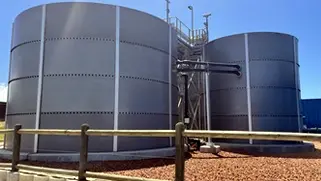
Advantages:
✅ Lasts up to 4× longer than a liner tank (20–40 years)
✅ Minimal maintenance
✅ No costly liner replacements
✅ Environmentally friendly – no liner waste
Disadvantages:
❌ Slightly higher upfront cost
SIDE-BY-SIDE COMPARISON
FEATURE
Lifespan
Maintenance
Downtime
Lifetime Cost
Water Quality
Environmental Impact
LINER TANK
5–10 years
Liner replacements
Every liner change
Higher
Good (if liner intact)
Liner waste
LINER FREE FBE COATED
20–40 years (Up to 4× longer)
Minimal – no liner to replace
Rare
Lower
Excellent – seamless coating
No liner waste
Which Should You Choose?
If you only need a short-term, budget-friendly solution, a liner tank might work for you.
But if you want a long-term, worry-free investment that saves you money and lasts decades, the answer is clear: Fusion-Bonded Epoxy tanks.
