
Skip to Content
Aquadam Steel Tanks
  • Home
  • About Us
  • Services/Products
    About us Partners Customers
    Products Services Help center
    Our blog Events Guides

    The team

    Since our inception in 1992, we have continually evolved and innovated to meet the ever-changing needs of our customers.  

    Discover our team
  • Blog/News
  • Contact
  • 0
  • Sign in
  • Quote Now
Aquadam Steel Tanks
  • 0
    • Home
    • About Us
    • Services/Products
    • Blog/News
    • Contact
  • Sign in
  • Quote Now

Why South Africa Is a Water-Scarce Country

Understanding the Structural Roots of South Africa's Water Crisis — and Why the Answer Is Not Simply "More Rain"
  • All Blogs
  • Steel Tanks
  • Why South Africa Is a Water-Scarce Country
  • April 21, 2026 by
    Why South Africa Is a Water-Scarce Country
    Aquasteel PTY Ltd, Ronald van Lochem


    Water scarcity in South Africa is usually explained as a natural condition. The country is dry. Rainfall is limited. Droughts are worsening. The climate is against us.

    This explanation is not wrong. But it is dangerously incomplete.

    South Africa's water crisis is not simply the product of geography and weather. It is the product of geography compounded by historical infrastructure decisions, policy frameworks designed around a narrow model of water availability, institutional failures that have deepened over decades, and a national conversation that has never fully grappled with the breadth of what the full water system actually contains.

    Understanding why South Africa is water-scarce — and which parts of that scarcity are structural rather than natural — is the starting point for any serious water security strategy, at national, municipal, farm, or household level
    The Geographic Reality: A Genuinely Semi-Arid Country

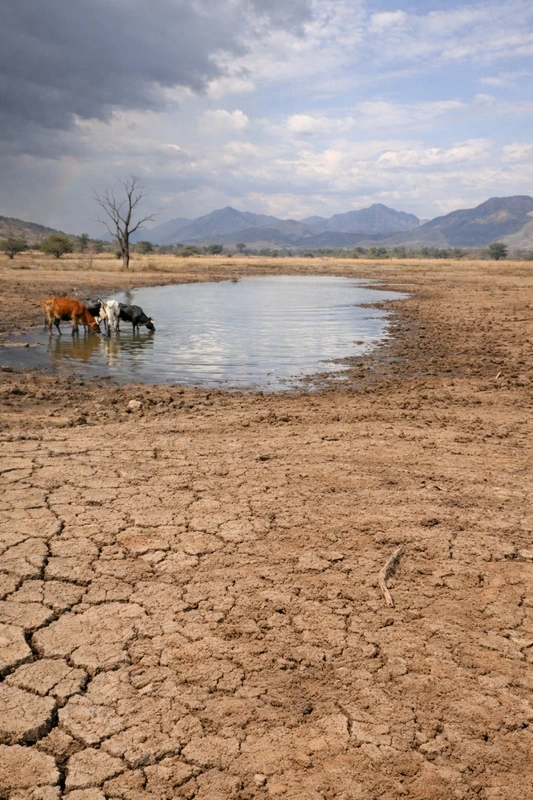
    South Africa's geographic water challenge is real and should not be minimised. The country receives an average annual rainfall of approximately 450mm — well below the global average of around 860mm. Much of the interior is classified as semi-arid or arid, and large portions of the Northern Cape, Western Karoo, and Free State receive less than 250mm per year.

    Rainfall is also highly variable across regions and across years. The summer rainfall zone — which covers most of the country's agricultural heartland — is subject to cycles of drought and above-average rainfall that can span multiple

    years. The Western Cape operates on a Mediterranean winter rainfall cycle, which creates its own seasonal storage challenges.

    Evaporation rates are high. South Africa loses a substantial proportion of its rainfall to evaporation before it can be captured or infiltrated — in some arid regions, evaporation potential exceeds annual rainfall by a factor of five or more. This means that even when rain falls, much of it is lost before it can be used.

    These are genuine constraints. They explain why South Africa has historically invested heavily in large dam infrastructure — the country has more large dams per capita than almost any other nation on Earth — and why water efficiency and demand management have been prominent features of water policy since the early twentieth century.

    But geography and climate explain only part of the story.

    The Historical Layer: Infrastructure Built for One Population

    South Africa's bulk water infrastructure was largely planned, designed, and constructed during the twentieth century — first under colonial administration and then under the apartheid state. The priorities that shaped that infrastructure were not national priorities in any equitable sense. They were priorities that served a fraction of the population.

    Irrigation schemes, inter-basin transfer systems, and bulk municipal supply networks were built to support white commercial agriculture, urban white residential areas, and industrial development linked to the mining economy. The majority of the population — rural, peri-urban, and township communities — was largely excluded from formal water infrastructure planning.
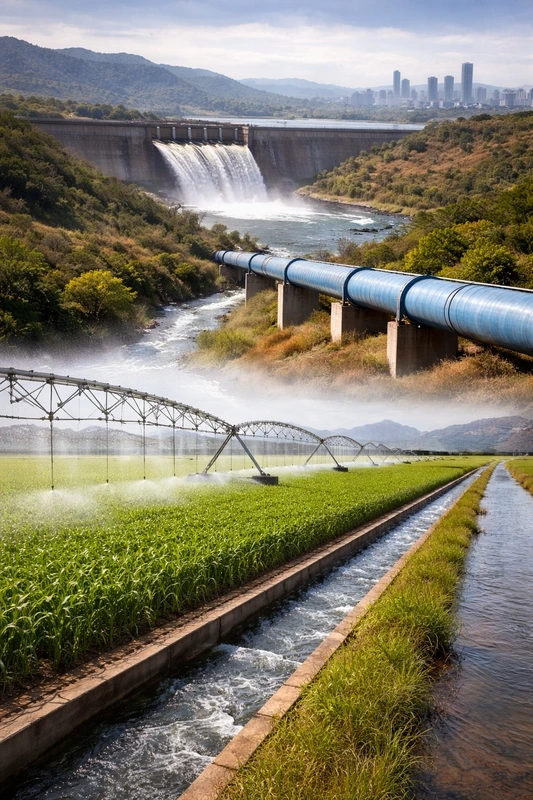
    The post-1994 democratic government inherited this infrastructure — extensive in some areas, almost entirely absent in others — and faced the immense challenge of extending basic water access to communities that had been systematically excluded. Significant progress was made in the decade after 1994, with millions of people gaining access to piped water for the first time.

    But the legacy distortion in infrastructure distribution did not disappear. Many communities still rely on infrastructure that was either never properly built, has been deferred for maintenance for so long it is effectively in decline, or was designed for much smaller populations than currently depend on it.

    This is not a natural water scarcity problem. It is a structural and political one — the consequence of infrastructure investment decisions made over a century, the effects of which are still being lived every day.


    The Policy Layer: A Framework Built on a Narrow Water Model

    South Africa's water policy framework — codified most significantly in the National Water Act of 1998 — is in many respects a world-leading piece of legislation. It introduced the concept of the ecological reserve, established water as a public resource rather than private property, and created a framework for water use licensing designed to allocate water equitably across social and economic needs.
    But the water model on which this policy framework rests has a significant blind spot.
    South Africa's planning, allocation, and scarcity assessments are built overwhelmingly around surface water — dams, rivers, and catchments — and shallow aquifer systems. The deep groundwater layer, which international research is increasingly confirming represents a substantial and largely uncharted water resource, has barely entered the operational water planning framework.
    The assumption embedded in the policy model is that the water available to South Africa is broadly equivalent to what falls as rain, accumulates in catchments, and is stored in dams and shallow aquifers. Under this model, the country is indeed severely constrained.
    But as research from Princeton University and the University of Arizona published in January 2025 confirmed, deep groundwater systems operate on continental scales — carrying water across basin boundaries through ancient geological networks, largely independent of local rainfall patterns. These deep seated water systems contribute more than half of baseflow in the majority of studied river basins globally. South Africa, sitting on among the world's oldest and most geologically complex basement rock formations, is not excluded from this picture.
    The practical implication is significant: South Africa may be operating a national water scarcity framework that systematically underestimates its available water inventory — not because the science is unavailable, but because the policy model has not yet integrated it.
    Water scarcity that is partly a consequence of an incomplete accounting framework is not the same as water scarcity that is purely a natural condition. One type demands resignation and rationing. The other demands better science, better planning, and better infrastructure.
    The Institutional Layer: The Collapse of Municipal Capacity
    Even within the constraints of the existing water model, South Africa's water crisis has been substantially worsened by institutional and governance failures at municipal level.
    The scale of these failures is not contested. The Department of Water and Sanitation's own assessments, successive Blue Drop and Green Drop reports, and years of parliamentary oversight have documented the deterioration: municipalities spending water infrastructure maintenance budgets on operational costs, infrastructure maintenance deferred until failure, technical capacity hollowed out by attrition and poor remuneration, billing systems that cannot recover revenue, and political interference in technical management.

    The result is that water that exists — in dams, in treatment works, in bulk transfer systems — fails to reach consumers not because it isn't there, but because the infrastructure between 
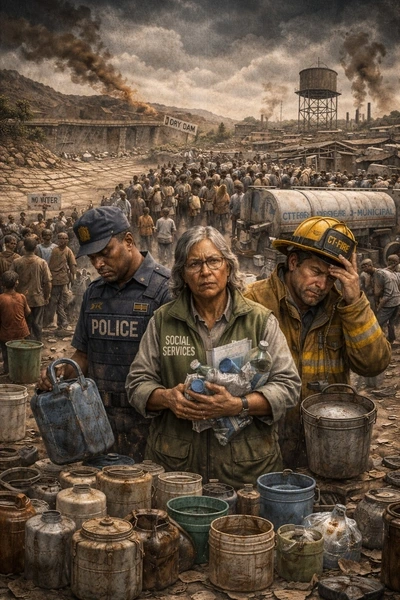
    source and tap has been allowed to deteriorate beyond reliable function.

    Non-revenue water — the proportion of treated, processed water that is lost to leaks, theft, and administrative failures before generating any billing revenue — runs at 40% or above in many municipalities. In some, it exceeds 60%. This is not a rainfall problem. It is a governance problem dressed as a scarcity problem.

    What "Water-Scarce" Actually Means for Planning

    Understanding the layered causes of South Africa's water situation — geographic, historical, policy-structural, and institutional — changes what good planning looks like.
    A country that is purely naturally water-scarce needs to focus on maximising the efficiency of whatever rainfall it receives, investing in demand management, and potentially developing alternative supply sources such as desalination.

    A country that is water-scarce partly because of institutional failure needs to fix governance and recover lost system capacity.

    A country that is water-scarce partly because its planning model has not yet accounted for deep groundwater resources needs better science and updated planning frameworks.

    A country that is water-scarce partly because historical infrastructure investment was distributed inequitably needs targeted capital programmes to close that gap.

    South Africa faces all four challenges simultaneously. Treating them as a single, undifferentiated natural condition leads to the wrong responses and the wrong investments.
    The Role of Decentralised Storage in a Structurally Scarce Environment
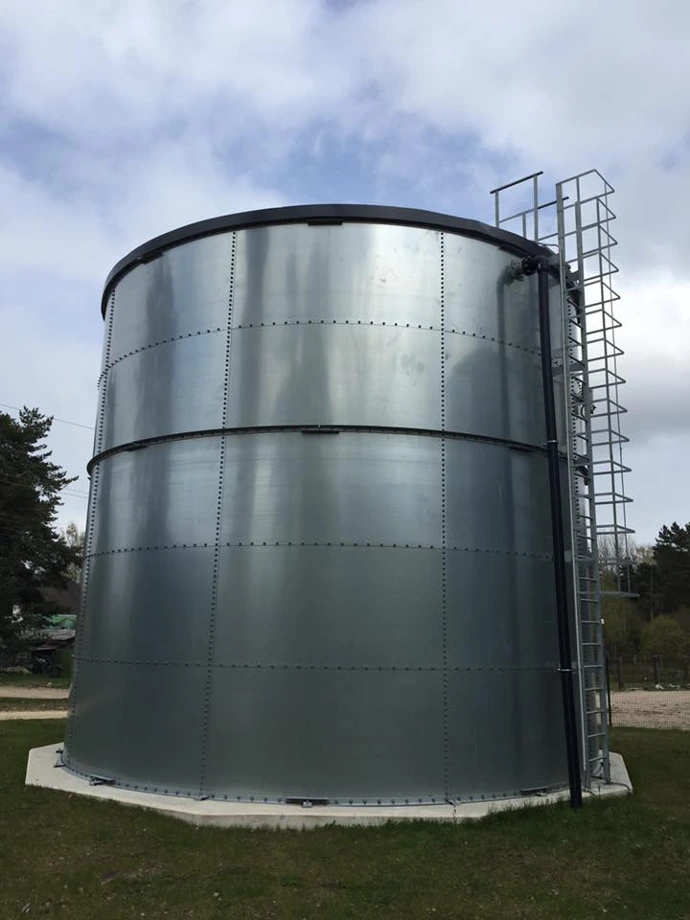
    In a country where centralised supply systems are unreliable — whether because of rainfall variability, infrastructure deterioration, governance failure, or a combination of all three — decentralised water storage is not a luxury. It is the practical infrastructure response to a structurally complex problem.
    Every farm, estate, municipality, and industrial facility that invests in its own storage capacity takes a step that none of the structural causes of scarcity can easily undo. A properly engineered steel tank holds water regardless of dam levels, municipal maintenance budgets, political cycles, or rainfall patterns. It is infrastructure that works inside the system as it exists — not as it should be.
    This is not a counsel of despair about the broader water situation. It is a recognition that structural problems take time to resolve, and that individuals, farms, and communities cannot wait for that resolution before securing their own water supply.


    Aquadam Steel water tanks
    The most resilient water strategy in a structurally water-scarce country combines honest understanding of the causes with practical infrastructure investment at the local level — building redundancy into a system that, at the centralised level, has very little.

    Closing Perspective 

     South Africa's water challenge is real. But it is not purely natural, not inevitable, and not unsolvable. Understanding exactly what kind of scarcity we face is the first step toward building the right response.


     Get in Touch now

    Aquadam
     

    Aquadam Steel Tanks
    International has been engineering steel water storage solutions for South African farms, municipalities, industries, and homes for over 30 years. Our range — from the 2,500-litre Home Tank to the 5-million-litre Dura Tank and Rhino Tank — is built to provide the decentralised water storage capacity that genuine resilience requires in a structurally complex water environment.
    in Steel Tanks
    Why South Africa Is a Water-Scarce Country
    Aquasteel PTY Ltd, Ronald van Lochem April 21, 2026
    Share this post
    Our blogs
    • Steel Tanks
    • News Blog
    Dams, Reservoirs, and Tanks: What's the Difference
    And Why It Matters More Than You Think

    Get in Touch ​

    Aquadam - Get in Touch


    Submit

    Thank You For Your Feedback

    Our team will message you back as soon as possible.
    In the meantime we invite you to visit our website.


    Aquadam Logo


    Water Storage Is Not A Product. It Is A Risk Decision.

    Aquadam engineers water systems that transfer risk away from 

    the owner — and into performance-backed steel infrastructure.

    USEFUL LINKS:

    Home
    About
    Legal
    Contact Us
    Get a Quote 

    311 Alwyn Str, Waltloo • Pretoria• South Africa

    sales@aquadam.co.za

    Copyright © Aquadam Steel Tanks Int. 2026
    Powered by Odoo - The #1 Open Source eCommerce