
The purchase price of a tank is a fraction of what it actually costs to own over its working life. The rest of that cost — maintenance, corrosion-driven repairs, downtime during failure, and eventual early replacement — doesn't show up until years after the decision was made, by which point it is too late to have chosen differently.
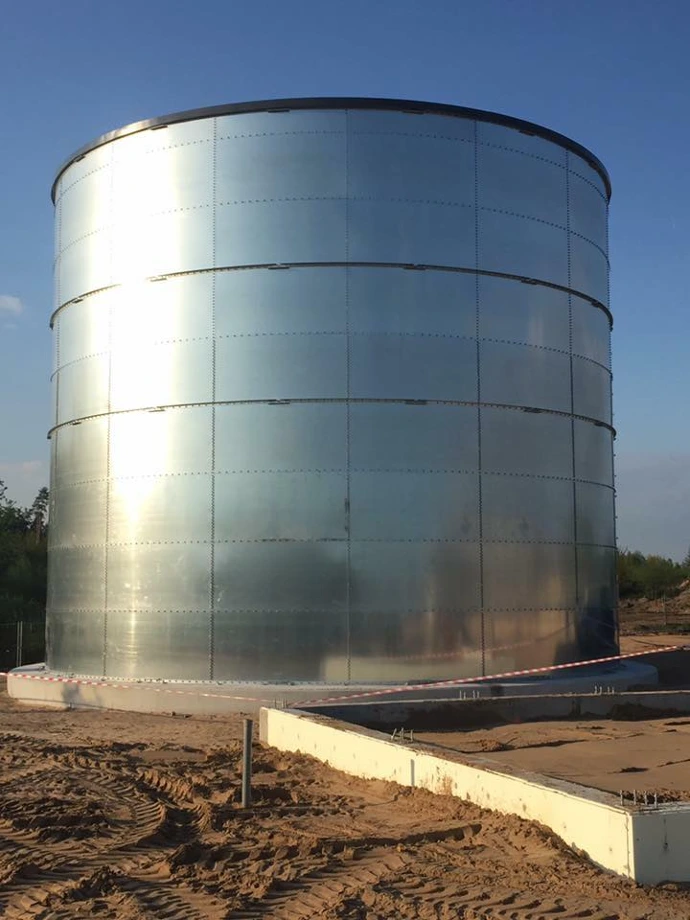
Total Cost of Ownership, Not Purchase Price
A tank priced lower on day one but requiring recoating, patch repairs, or early replacement within a decade is not the cheaper option. It is simply the option whose real cost has been deferred to a year when it is no longer anyone's line item to explain.
Where the Real Cost Actually Lives
The single biggest lever on a steel tank's lifetime cost is corrosion resistance — specifically, the coating system protecting the steel from the water it's meant to hold and the environment it sits in. A basic galvanized coating and a fusion-bonded epoxy (FBE) coating are not cosmetically different options at different price points. They represent genuinely different lifespans, different maintenance schedules, and different failure timelines. The coating premium on a well-specified tank is not an upsell — it is the mechanism by which the "cost per year of service" number actually comes down, even though the invoice number goes up.
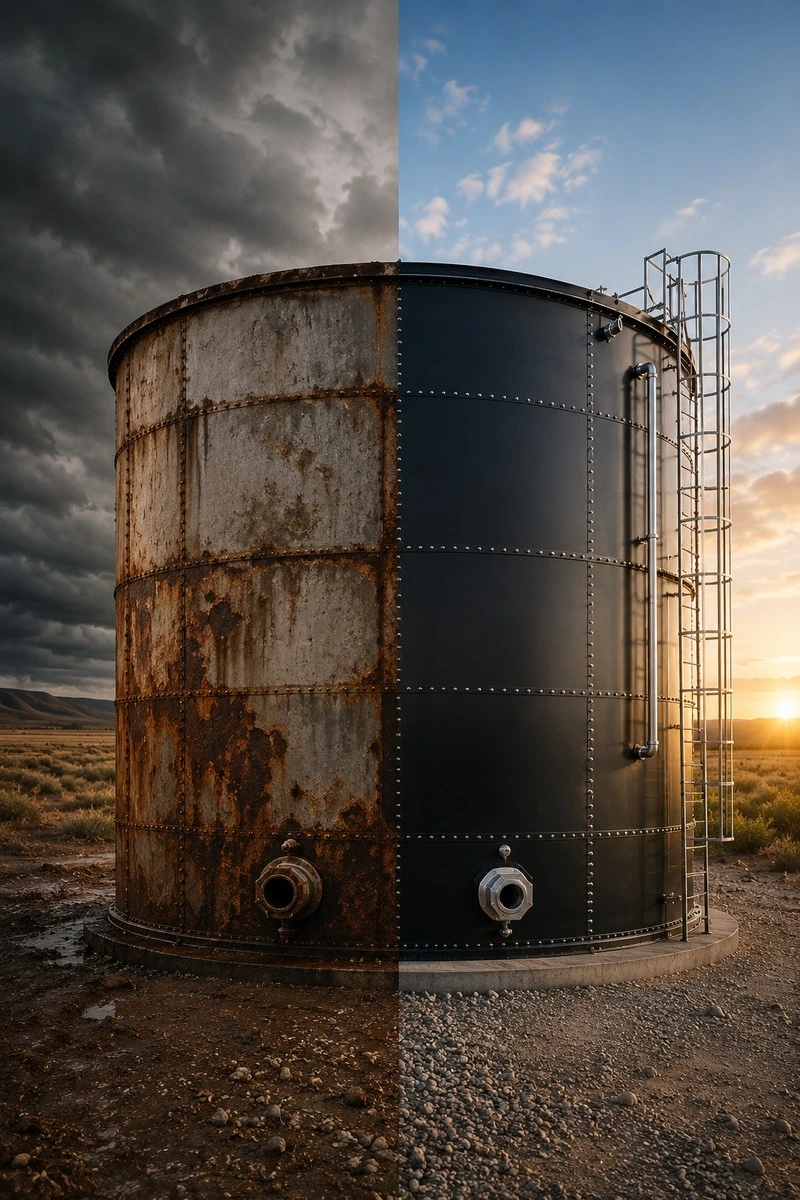
The second lever is failure risk itself. A structural failure is not just a repair cost. It is lost product (for an industrial process), lost yield (for a farm mid-irrigation cycle), or lost occupancy (for a completed development waiting on its water compliance). None of that appears on the tank's price tag, and all of it appears on the owner's balance sheet the day it happens.
Why This Changes the Buying Conversation
For agricultural land in particular, this has a further consequence. Secure, well-specified water infrastructure is increasingly recognised as a factor in land valuation — not a cosmetic add-on, but part of what determines whether a property can sustain its productive use through a dry season. A tank bought on lowest invoice price, and requiring premature replacement, does not protect that value. A tank specified on total cost of ownership does.
The Practical Question to Ask Instead
Water storage is not a product. It is a risk decision — and the invoice price is only ever one input into that decision, never the whole of it.
Aquadam Steel Tanks International builds every tank to be evaluated on that basis: real coating specifications, real expected lifespans, and a total cost of ownership that holds up over decades, not just on delivery day. Ask our sales team for a cost-per-year comparison, not just a quote.